


Djellaba vs. Caftan vs. Takchita: What’s the Difference and When to Wear Each?
Moroccan fashion is rich, elegant, and deeply symbolic. Three garments often sit at the center of the conversation: the djellaba, the caftan, and the takchita. They may all feel distinctly Moroccan, but they serve different purposes, fit different occasions, and signal different levels of formality. If you are shopping for traditional clothing, attending a celebration, or simply trying to understand Moroccan style, learning the difference between these pieces will help you choose the right look with confidence.
This guide breaks down each garment in simple terms, explains when to wear it, and offers style advice for modern wardrobes. By the end, you will know which Moroccan outfit suits a casual day, a family gathering, or a formal event.
What Is a Djellaba?
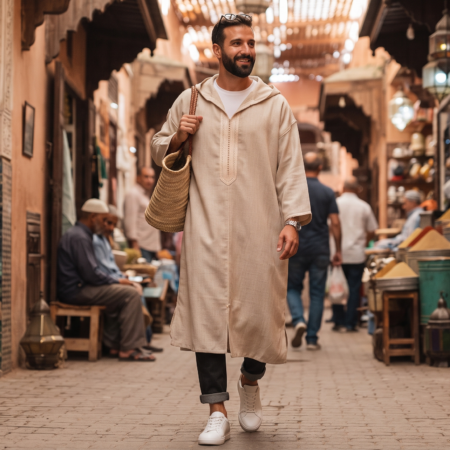
The djellaba is one of the most recognizable garments in Morocco. It is a long, loose-fitting robe with long sleeves and a pointed hood. Traditionally worn by both men and women, the djellaba is practical, modest, and comfortable. In everyday life, many Moroccans wear it for errands, Friday prayers, religious occasions, and cool evenings.
Modern djellabas come in lightweight cotton for spring and summer, as well as wool or heavier blends for colder months. Embroidery may be subtle or decorative, depending on the region and the intended use. Because the silhouette is relaxed, the djellaba is often the easiest Moroccan traditional outfit to wear casually.
When to wear a djellaba
- Daily wear and casual gatherings
- Religious or family occasions
- Travel days when comfort matters
- Cooler weather, especially in the evening
What Is a Caftan?
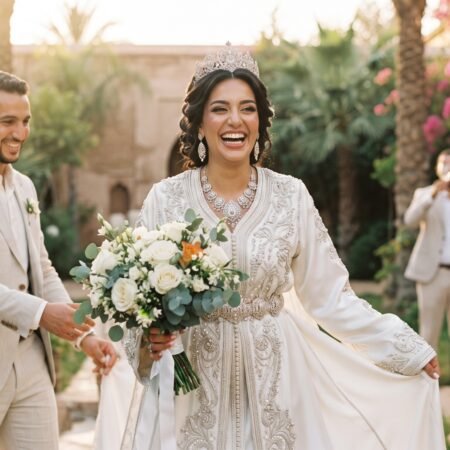
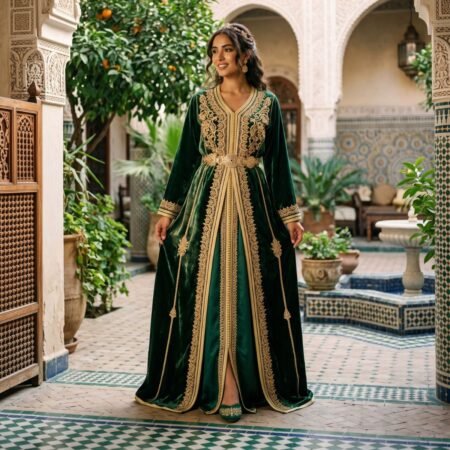
The Moroccan caftan is a more refined and ceremonial garment. Usually associated with women’s fashion, it is worn at weddings, engagement parties, Eid celebrations, and special events. A caftan is typically a long dress or tunic-like gown with elegant embroidery, rich fabrics, and detailed craftsmanship.
Unlike the djellaba, the caftan is designed to make a statement. Silk, velvet, brocade, and satin are common materials, and many caftans feature handmade detailing such as sfifa, aakad, beading, or metallic threadwork. It is one of the clearest expressions of Moroccan luxury fashion.
When to wear a caftan
- Weddings and formal receptions
- Festive holidays such as Eid
- Photographs, ceremonies, and special evenings
- Any event where polished traditional style is expected
What Is a Takchita?
The takchita is often considered the most elaborate of the three. It is a two-piece Moroccan outfit: a simple underdress and a decorative outer layer, usually tied at the waist with a belt called a mdamma. The layered design creates structure and elegance, making the takchita ideal for high-end celebrations.
While the caftan can appear more streamlined, the takchita adds volume and drama. Brides, wedding guests, and women attending upscale ceremonies often choose takchitas because they photograph beautifully and allow for glamorous styling.
When to wear a takchita
- Wedding receptions and henna nights
- Formal family celebrations
- Luxury events and festive galas
- Occasions where a dramatic silhouette is welcome
Key Differences at a Glance
If you want the simplest possible rule, think of it this way: the djellaba is the everyday traditional robe, the caftan is the elegant formal dress, and the takchita is the layered showpiece for special occasions. The differences are about more than style; they also reflect comfort, craftsmanship, and social context.
The djellaba is practical and versatile. The caftan balances elegance with tradition. The takchita is the most luxurious and ceremonial. Once you understand these roles, choosing the right outfit becomes much easier.
How to Style Moroccan Traditional Clothing Today
Modern Moroccan fashion often blends tradition with contemporary accessories. A djellaba can be paired with simple leather sandals or babouche slippers. A caftan looks beautiful with delicate jewelry and a structured clutch. A takchita often works best with statement earrings, refined heels, and a polished hair style.
If you are buying one of these garments online, pay attention to fabric quality, lining, embroidery placement, and size adjustments. A well-made piece should feel comfortable without losing its shape. Authentic Moroccan style is not only about appearance; it is also about craftsmanship and fit.
Which One Should You Choose?
Choose a djellaba if you want comfort and authenticity. Choose a caftan if you need elegant formalwear. Choose a takchita if you are dressing for a major celebration and want a dramatic, fashion-forward silhouette. Each garment tells a different story, but all three reflect the beauty of Moroccan culture.
Understanding djellaba vs. caftan vs. takchita helps you dress with confidence and respect for tradition. Whether you are visiting Morocco or expanding your wardrobe, these pieces offer timeless style with a distinctly Moroccan identity.

No Comment! Be the first one.